Technical
Demolition
Structural demolition where the standard approach will not work. Live and occupied buildings, structures that have to stay standing next to the one coming down, heritage fabric, restricted access, and programmes sequenced around somebody else's operations. Manual deconstruction where a machine cannot go.
Demolition that
has to be engineered,
not just done.
Most demolition is a machine, a skip and a clear site. Technical demolition is what you call when none of that applies: when the building next door has to stay up, when the floor below is trading, when the structure is heritage-listed, or when the only way in is through a doorway.
It is the work that gets priced by the few contractors willing to engineer a sequence for it, and declined by everyone else. Sixteen years of it is why eighty percent of our work comes from repeat clients and referrals.
Every job runs under the same in-house licence structure and safety system. No subcontracted asbestos, no borrowed engineering, and no gap in the chain of responsibility when something on site changes.
Whether removing a heritage balustrade or a linear accelerator, the exact same attention to detail is applied.
Advanced DeconstructionThe scope,
in full.
If your job is on this list we have done it before, in a live environment, under a programme. If it is not, it is still worth a call, because most of the work we take on was not on anyone's list either.
- Manual DeconstructionHand demolition for sensitive or spatially challenged projects, where plant cannot reach or cannot be used safely.
- Structural SeparationTaking one building down while the one attached to it stays standing, propped, stable and ready to tie into.
- Internal DemolitionTenancy return to base build, strip-outs and structural modifications inside operating premises.
- Heritage Pre-RenovationControlled removal within heritage fabric, retaining what has to be kept and recording what comes out.
- Tower Crane DemolitionDismantling and removal of tower cranes and the structures supporting them.
- Fire-Damaged StructuresMake-safe and removal of fire-damaged buildings, including those with asbestos contamination.
- Medical DecommissioningDecommissioning and removal of medical equipment from active healthcare facilities.
- Hazardous MaterialsRemoval and management of asbestos, SMF, lead and PCBs as part of the demolition scope.
Exactly what we
hold, by jurisdiction.
| Jurisdiction | Demolition licence | Asbestos |
|---|---|---|
| QUEENSLAND | UNRESTRICTED | CLASS A & B |
| SOUTH AUSTRALIA | UNRESTRICTED | CLASS A & B |
| WESTERN AUSTRALIA | UNRESTRICTED | CLASS A & B |
| TASMANIA | UNRESTRICTED | CLASS A & B |
| VICTORIA | UNRESTRICTED | CLASS A & B |
| ACT | UNRESTRICTED | CLASS A & B |
| NEW SOUTH WALES | OVER 15 METRES | CLASS A & B |
Licences are held per jurisdiction, not nationally. Crews travel as required and have completed work from Brisbane to Perth and Hobart to Weipa.
Five stages.
Nothing improvised.
A technical demolition is decided before anyone touches the structure. By the time plant arrives, the sequence, the propping and the failure modes have already been worked through on paper.
Engineering and sequencing
The structure is assessed, load paths are traced, and the order of removal is designed around what has to stay standing. This is where a technical job is won or lost, and it happens before a price is confirmed.
Temporary works and propping
Engineered propping, shoring and structural support are installed so retained elements stay stable through every stage, including the moment the structure they were tied to disappears.
Containment and protection
Containment scaffold, screening and exclusion zones go up to protect adjoining structures, the public and anyone still operating next door. Hazardous materials are identified and removed before the main works start.
Staged removal
The structure comes down in the designed order, by machine where there is room and by hand where there is not. Programmes are sequenced around live operations, which often means night works.
Separation, validation and handover
Retained structures are left free-standing, stable and ready for the incoming build. Waste is separated and diverted for recycling where it can be, and the site is handed over with the documentation to prove what was done.
Two recent
examples.
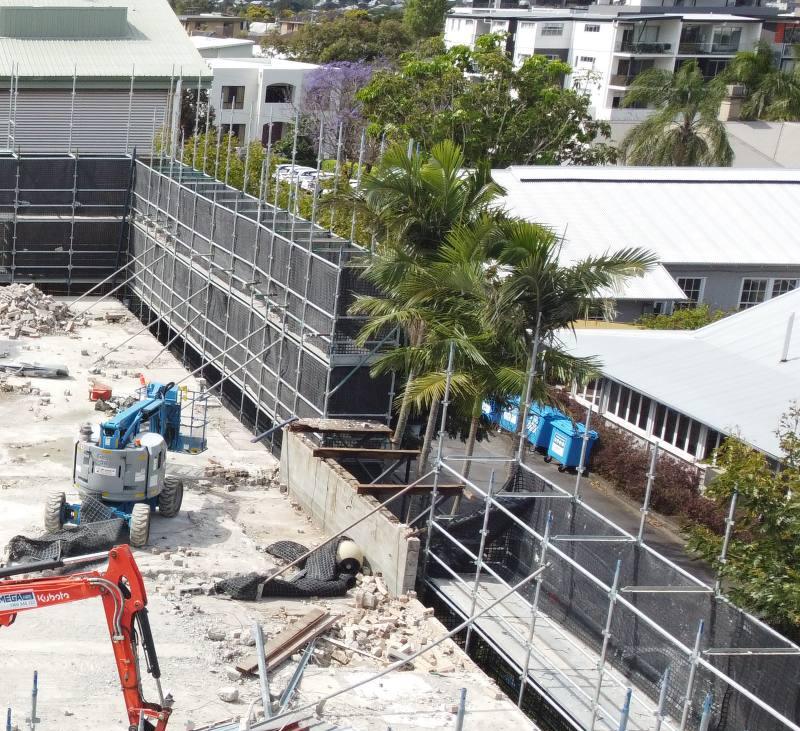
Technical demolition,
by sector.
The questions
we actually get.
Written for the person who has to justify the appointment internally, not for a search engine.
What makes a demolition "technical" rather than standard?
A standard demolition has room, clear access and nothing that has to survive. A technical demolition has at least one constraint that removes those options: an adjoining structure that must stay standing, a building still occupied or trading, heritage fabric to retain, restricted access, or a programme that has to work around somebody else's operations. The difference is that the sequence has to be engineered before anything comes down.
Can you demolish part of a building and leave the rest standing?
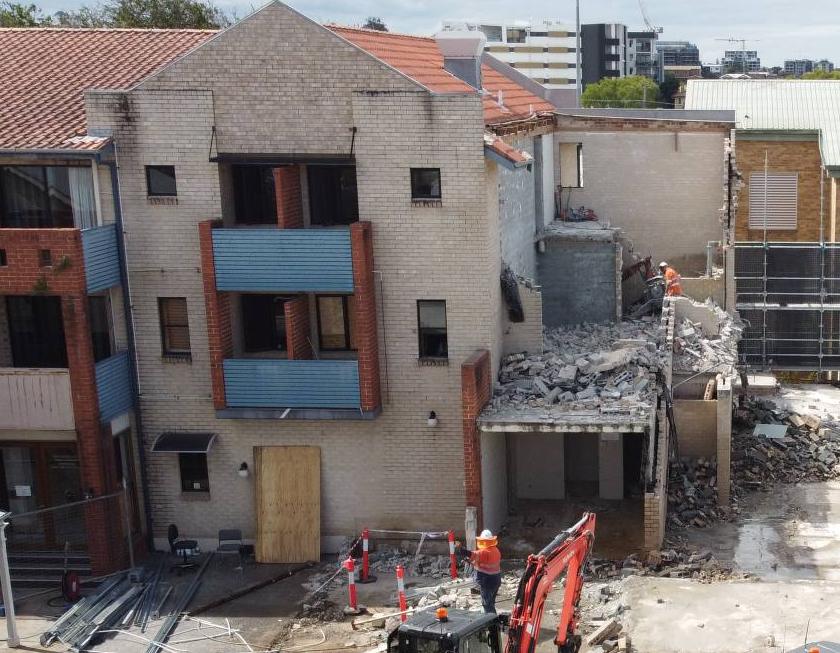
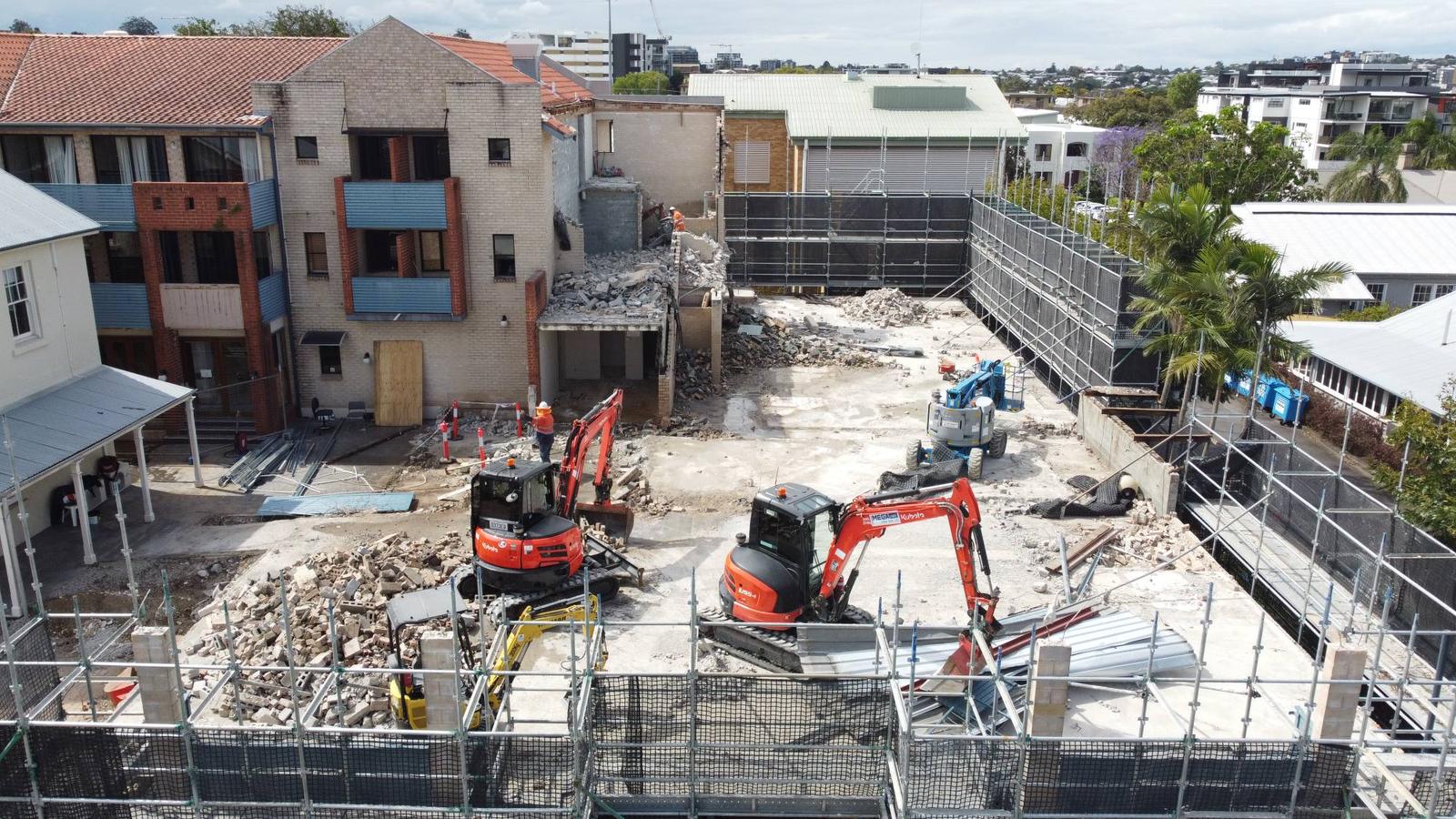
Yes, and it is a large part of what we do. It requires engineered temporary propping, a designed removal sequence and structural separation from the retained building. At the Ramada Hotel we removed the upper levels of two buildings while the adjoining structures stayed in place, then left the retained elements free-standing and ready to tie into the new structure.
Do you work around a site that is still operating?
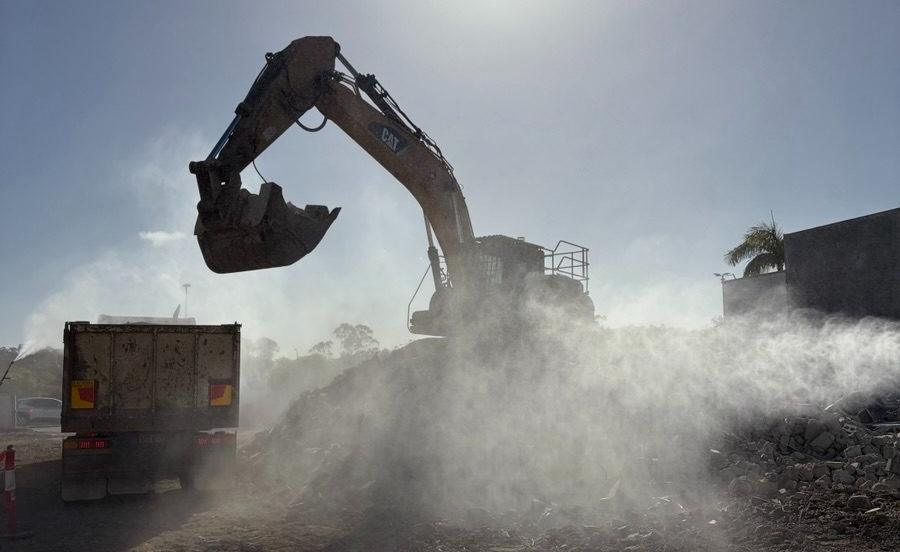
Routinely. It usually means night works, staged access and tighter containment. The Grand Plaza cinema demolition ran entirely at night beside a trading shopping centre, with live service lines running to tenancies inside it, and was delivered without disrupting them.
Which states are you licensed in?
We hold unrestricted demolition licences in Queensland, South Australia, Western Australia, Tasmania, Victoria and the ACT, and an over-15-metre licence in New South Wales. Licences are held per jurisdiction rather than nationally. Crews travel as required and have completed work from Brisbane to Perth and Hobart to Weipa.
Do you handle the asbestos, or does that go to another contractor?
We handle it. Asbestos, SMF, lead and PCBs are removed and managed in-house under our own Class A and B licences as part of the demolition scope. That matters on a technical job, because hazardous material is usually found partway through rather than identified cleanly up front, and a second contractor means a second mobilisation and a stopped programme.
What do you need from us to price a job?
Drawings if they exist, a scope of what has to go and what has to stay, any hazardous materials register you hold, and the site constraints that are not obvious from a plan: access, trading hours, neighbours, service lines. If a site visit is quicker than assembling that, we would rather come and look.
Rarely one
discipline alone.
A technical demolition usually pulls in two or three of the others. All of them are delivered in-house, under the same licence structure and the same safety system.
Demolition Works
Full-scale commercial and industrial demolition under unrestricted licence.
03Asbestos Management
Class A and B removal, registers, air monitoring and independent clearance.
04Soil Remediation
Contaminated land remediation, soil testing and validation, bulk earthworks.
05Temporary Works
Engineered propping, shoring and structural support design.
06Concrete Specialists
Precision cutting, coring and controlled concrete removal.
Price a
project
Scope, drawings, site constraints. We will tell you what is actually involved, including the parts nobody else mentions.
Start an enquiry Emergency responseUrgent
works
Structural failure, unexpected asbestos, a site that has to be made safe today. Straight to a person, not a form.
1300 988 488 Capability statementSend to
your team
The full capability statement, licences and recent project record, as a PDF you can put in front of a pre-qual panel.
Download